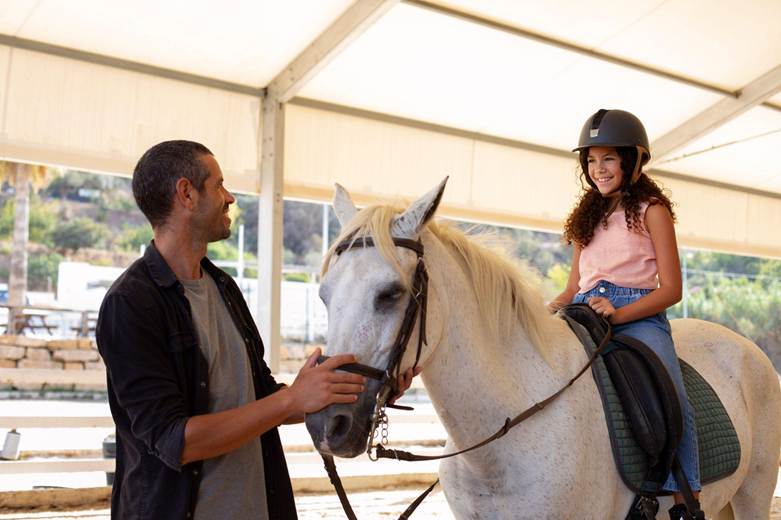
Exceptional equestrian performance, as Freddie Vasquez Jr understands, is rarely the product of a single lesson, one talented horse, or one impressive competition round. The strongest programs are built around systems that allow horses and riders to develop consistently, recover appropriately, and arrive at important moments prepared to perform.
That distinction becomes increasingly important as riders move beyond the fundamentals.
At an advanced level, improvement is rarely about simply riding more. It involves coordinating training, conditioning, recovery, horse care, competition planning, and rider development so that each element supports the others.
The result is an approach that treats performance as an interconnected process rather than a collection of individual rides.
Why One Good Ride Does Not Define Progress
A particularly successful lesson can feel like proof that everything is moving in the right direction.
But equestrian development is more complicated.
A horse may jump exceptionally well one day and struggle the next. A rider may execute a difficult exercise successfully before encountering the same challenge under different conditions. Weather, fatigue, confidence, physical condition, training load, and the demands of a particular course can all influence performance.
That is why experienced programs look for patterns rather than isolated results.
- A single ride provides information.
- A series of rides provides context.
Over time, that context helps trainers determine whether a change represents genuine development or simply a temporary variation in performance.
The Horse Is an Athlete, Not a Piece of Equipment
A sophisticated training system begins with recognizing that horses have changing physical and mental needs.
- Training load cannot be evaluated independently from recovery.
- Competition cannot be separated from conditioning.
- Skill development cannot be separated from physical capacity.
A horse that is technically capable of performing an exercise may not benefit from repeating it indefinitely if fatigue or physical limitations are beginning to affect execution.
Effective programs therefore consider factors such as:
- Training intensity
- Frequency of work
- Recovery periods
- Conditioning
- Nutrition
- Veterinary care
- Farrier management
- Travel demands
- Competition schedules
- Individual temperament
The objective is not simply to make a horse capable of doing more.
It is to help the horse remain capable over time.
Rider Development Has Its Own System
The same principle applies to riders. Technical ability is only one component of competitive readiness. A rider also needs decision-making skills, physical coordination, confidence, course awareness, adaptability, and the ability to remain composed when circumstances change.
Those qualities do not necessarily develop at the same speed.
A rider may possess excellent technical mechanics while still learning how to manage pressure in competition. Another may have strong instincts but need greater consistency in position or communication.
A comprehensive program recognizes those differences.
Instead of applying the same training formula to everyone, it identifies which elements require attention and how they interact.
Coaching Creates the Connection Between Components
Coaching is often associated primarily with what happens during a lesson. In a sophisticated program, its role is broader. A coach can help connect individual observations into a larger performance picture.
For example, a change in jumping performance may not be exclusively a jumping problem. It could relate to rider position, timing, fatigue, confidence, conditioning, or a change in the horse’s physical comfort.
Looking at the entire system prevents trainers from automatically treating every problem as a technical fault.
That distinction can save considerable time.
Instead of repeatedly correcting the visible symptom, the underlying contributor can be investigated.
Consistency Is More Valuable Than Constant Intensity
There is a temptation in competitive environments to believe that more training automatically produces more progress.
But training creates stress as well as adaptation.
If demands consistently exceed the horse’s ability to recover, additional work can become counterproductive. The same is true for riders. A program built around relentless intensity may produce short-term improvements while compromising long-term development.
Consistency provides a more sustainable model.
That can mean alternating demanding sessions with lighter work, adjusting training according to the horse’s condition, and allowing the rider enough recovery to maintain concentration and physical control.
The goal is not maximum effort every day.
The goal is appropriate effort at the appropriate time.
Competition Should Fit the Development Plan
Competition is an important part of equestrian development, but it should have a purpose.
Different competitions can provide different types of information.
One may help evaluate technical consistency. Another may expose weaknesses in course management. A higher-level class may test whether horse and rider can transfer training into a more demanding environment.
The question should therefore be more specific than whether a horse or rider is “ready to compete.”
Ready for what?
Ready for a particular height?
- A particular course complexity?
- A particular level of pressure?
- A particular schedule?
Thinking in those terms creates more useful competition decisions.
Recovery Is Part of Performance
Recovery is sometimes treated as time when nothing is happening.
In reality, recovery is part of what allows adaptation to happen.
A horse needs appropriate time between demanding efforts. Riders also need opportunities to restore physical and mental capacity.
Recovery can include:
- Lower-intensity work
- Turnout
- Appropriate rest
- Mobility and conditioning
- Veterinary assessment when needed
- Careful management of travel
- Adjustments after competition
The correct recovery strategy will vary according to the horse, rider, training phase, and competition calendar.
That is precisely why recovery belongs inside the training system rather than being treated as an afterthought.
Communication Between Professionals Matters
High-level equestrian programs can involve multiple specialists.
Veterinarians, farriers, trainers, riders, nutrition professionals, bodyworkers, and other specialists may each see a different part of the horse’s condition. When those observations remain isolated, important patterns can be missed. When communication is strong, information becomes more useful.
A subtle change noticed by a rider may become significant when combined with a veterinarian’s assessment or a farrier’s observation. A trainer may recognize that a technical problem appears only after a particular training load.
Systems work because information moves between their parts.
Equipment Should Support the Program
Equipment is another component that should be considered within the larger system.
Saddles, bridles, boots, protective equipment, and other gear should support the horse and rider rather than compensate for unresolved training problems.
Equipment decisions should account for fit, function, comfort, discipline, and individual needs. The newest or most expensive option is not automatically the most appropriate. A well-designed program asks whether equipment contributes to the overall objective.
Data Can Help, But Observation Still Matters
Modern athletes have access to more information than ever.
Training records, competition results, conditioning information, video analysis, and performance tracking can reveal patterns that might otherwise be difficult to identify.
But data should support judgment rather than replace it. A spreadsheet cannot fully describe how a horse feels on a particular day. Video can reveal a technical detail while missing the context surrounding it.
Experienced observation remains essential because equestrian performance involves living athletes whose condition can change continually.
The strongest approach combines measurable information with informed observation.
Systems Make Personalization Possible
A structured program does not have to mean a rigid program.
In fact, the opposite can be true.
Once the major components of performance are understood, trainers can make more informed adjustments for individual horses and riders.
One horse may require greater emphasis on conditioning. Another may benefit from more recovery between demanding sessions. One rider may need technical repetition.
Another may need more opportunities to develop decision-making under pressure. A system provides the framework. Personalization determines how that framework is applied.
Looking Beyond the Next Round
The most valuable measure of an equestrian program is not necessarily its performance on a single competition day.
Long-term development provides a more revealing test.
- Is the horse becoming stronger and more consistent?
- Is the rider becoming more independent in decision-making?
- Are challenges being identified earlier?
- Is the training program becoming more precise?
- Can performance be maintained without continuously increasing workload?
Those questions shift attention from immediate results toward sustainable capability.
Building an Ecosystem for Performance
Exceptional equestrian performance emerges from relationships between many moving parts.
- Training provides stimulus.
- Conditioning builds capacity.
- Recovery allows adaptation.
- Coaching provides direction.
- Competition provides feedback.
- Horse care supports physical readiness.
- Rider development builds the ability to make increasingly sophisticated decisions.
None of these elements operates independently.
When they are coordinated effectively, the entire program becomes more resilient.
Conclusion
The strongest equestrian programs are not defined by how much they can accomplish during one ride. They are defined by how effectively they create the conditions for consistent development over months and years.
That requires a systems-based approach in which horse welfare, rider development, coaching, conditioning, recovery, competition, equipment, and communication are considered together.
Individual rides will always matter. They provide the moments in which preparation becomes visible.
But the preparation itself is what creates those moments.
The most successful programs therefore look beyond the next lesson or competition and ask a larger question: What system will allow this horse and rider to continue becoming better, stronger, more capable, and more confident over time?